Training your dog to walk on a leash is a fundamental skill that enhances their safety and makes walks enjoyable for both of you. Proper leash training helps prevent pulling, leash reactivity, and unwanted behaviors. If you’re looking for tips on how to teach a dog to walk on a leash or need help to train a puppy to walk on a leash, this guide will help establish a positive walking routine.
Leash training is also an essential part of dog training in general, as it helps your dog develop self-control and good manners. A well-trained dog that pays attention while walking on a leash will be calmer and more responsive in other situations as well.
Choosing the Right Leash and Collar
Selecting the appropriate harness and leash is crucial for successful training. Different options work best depending on your dog’s size, breed, and temperament:
- Flat Collar and Leash: Ideal for well-behaved dogs that don’t pull.
- Harness: Distributes pressure evenly across the chest, great for dogs that tend to pull.
- Head Halter: Helps control strong pullers by guiding their head movement.
- Retractable Leashes: Not recommended for training, as they can encourage pulling.
How to Fit the Collar or Harness
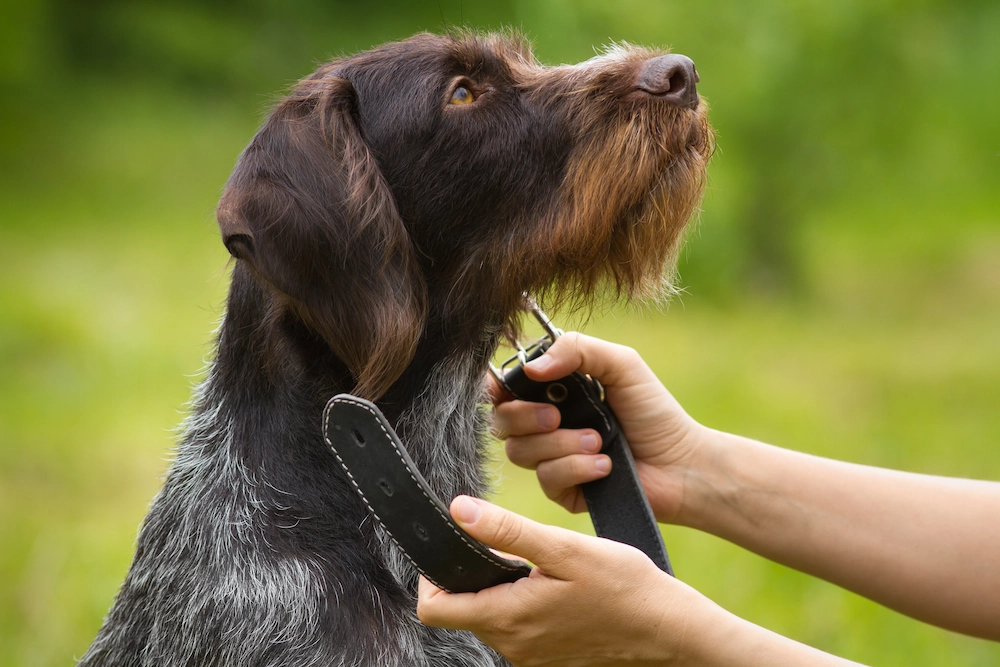
- Ensure a two-finger gap between the collar and your dog’s neck for comfort.
- The harness should fit snugly but allow free shoulder movement.
- Adjust straps regularly to prevent chafing or escape.
- Consider using a martingale collar for dogs that tend to slip out of standard collars.
How to Fit the Collar or Harness
- Ensure a two-finger gap between the collar and your dog’s neck for comfort.
- The harness should fit snugly but allow free shoulder movement.
- Adjust straps regularly to prevent chafing or escape.
- Consider using a martingale collar for dogs that tend to slip out of standard collars.
Introducing Your Dog to the Leash
Before heading outside, help your dog become comfortable with the leash indoors:
- Introduce the leash gradually – Let your dog sniff it while offering tasty treats.
- Attach the leash indoors – Allow your dog to move around freely while dragging the leash.
- Practice walking short distances – Encourage them to follow you using positive reinforcement.
- Reward them with a treat when they walk beside you on a loose leash without pulling.
- Engage in play with the leash on to associate it with fun and positive experience
Introducing Your Dog to the Leash
Before heading outside, help your dog become comfortable with the leash indoors:
- Introduce the leash gradually – Let your dog sniff it while offering tasty treats.
- Attach the leash indoors – Allow your dog to move around freely while dragging the leash.
- Practice walking short distances – Encourage them to follow you using positive reinforcement.
- Reward them with a treat when they walk beside you on a loose leash without pulling.
- Engage in play with the leash on to associate it with fun and positive experience
Positive Reinforcement During Introduction
- Use cheerful tones to create a positive association with the leash.
- Practice short training sessions multiple times a day.
- If your dog hesitates, use gentle encouragement instead of forcing movement.
- Reward them with their favorite tasty treats every time they pays attention to you.
Basic Leash Training Steps
Before diving into specific training techniques, it’s important to establish a strong foundation for your dog’s leash behavior. Begin by focusing on creating a positive association with the leash and collar. This will set the stage for successful training sessions.
Ensure your dog is comfortable and calm while wearing the leash. Any discomfort or resistance can make training harder. With patience and consistency, your dog will learn that walking on a leash is enjoyable. This positive experience will lay the foundation for successful trainin
Teaching Loose Leash Walking
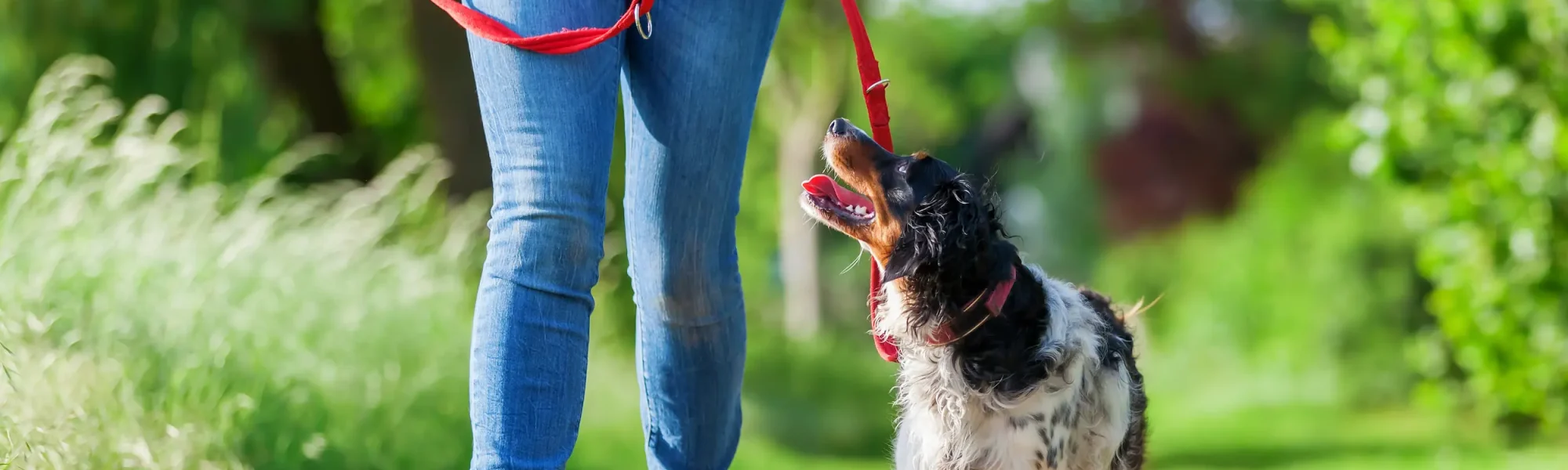
Loose leash walking means your dog walks calmly beside you without tension on the leash.
- Start indoors or in a quiet area.
- Hold the leash with slack and stand still if your dog pulls.
- Encourage them to return to your side and reward them when they do.
- Use verbal cues like “let’s go” or “heel” to reinforce walking next to you.
- Increase distractions gradually while practicing walking.
- Practice walking in different environments to generalize good behavior.
- Use a clicker or marker word to reinforce good habits instantly.
Correcting Pulling Behavior
If your dog pulls:
- Stop moving immediately. Do not allow forward motion if they are pulling.
- Wait for them to turn back toward you, then continue walking.
- Use a head halter or front-clip harness for extra control.
- Reward them with a treat when they walk politely.
- Practice turning frequently so your dog learns to stay focused on you.

Correcting Pulling Behavior
If your dog pulls:
- Stop moving immediately. Do not allow forward motion if they are pulling.
- Wait for them to turn back toward you, then continue walking.
- Use a head halter or front-clip harness for extra control.
- Reward them with a treat when they walk politely.
- Practice turning frequently so your dog learns to stay focused on you.
Lengthening Walking Sessions
- Begin with short walks of 5–10 minutes and gradually extend them.
- Vary the route to keep your dog engaged and prevent boredom.
- Introduce pauses and redirections to reinforce loose leash walking.
- Increase the difficulty by adding distractions such as other dogs, cars, or people.
- Play engagement games like “find it” to encourage focus on you.
Troubleshooting Common Leash Problems
When facing leash problems, it’s important to stay patient and consistent. Understanding your dog’s behavior and identifying the root cause of the issue can greatly speed up their improvement. Each dog learns at their own pace, so it’s essential to adjust your training techniques based on their individual needs. Addressing leash problems early can help prevent them from becoming habits, ensuring that both you and your dog enjoy stress-free walks.
Leash Reactivity
If your dog barks or lunges at other dogs or people:
- Maintain distance from triggers and slowly desensitize them.
- Redirect their focus with treats and praise when they remain calm.
- Consult a professional dog trainer if the issue persists.
- Use calm body language and avoid tightening the leash unnecessarily.
Dealing with Distractions
Dogs can be easily distracted during walks. To keep their attention:
- Bring high-value treats and use them strategically.
- Keep training sessions short and fun.
- Practice walking in different environments to improve focus.
- Teach your dog a focus command such as “look at me” to reinforce attention.
- Use structured routines like “walk, sit, reward” to reinforce obedience.
Stopping Abruptly
If your dog frequently stops and refuses to walk:
- Check for discomfort (ill-fitting harness, paw injury, etc.).
- Use enthusiasm and encouragement rather than pulling them forward.
- Incorporate play and breaks to make walking enjoyable.
- Allow sniffing breaks to keep walks mentally stimulating.
- Use their favorite toy to encourage forward movement.
Transitioning from Puppy to Adult Walking
Puppies have shorter attention spans and may require additional patience:
- Start with 5-minute training sessions to build focus.
- Allow time for exploring safely, reinforcing a positive experience.
- Gradually increase the length of walks while maintaining consistency.
- Encourage calm greetings with other dogs to prevent overexcitement.
- Train using daily structured walks to develop good long-term habits.
Common Mistakes to Avoid
- Inconsistent Rules – Allowing pulling sometimes but correcting it later confuses your dog.
- Yanking the Leash – This can cause fear or injury; instead, use redirection.
- Skipping Training Sessions – Regular practice walking improves progress.
- Not Using Rewards Effectively – Reinforce good behavior with timely treats and praise.
- Using the Wrong Equipment – A poorly fitting collar or harness can make training frustrating.
- Walking Without Engagement – If you ignore your dog, they will focus on distractions instead.
- Ending Walks Abruptly – If your dog enjoys walking, stopping suddenly can create frustration.
Conclusion
Leash training requires patience, consistency, and positive reinforcement. Use the right collar and leash, and reward good behavior. By addressing issues early, you can train your dog to walk on a leash calmly and without stress. Keep training sessions short, enjoyable, and engaging, and your dog will quickly master walking on a leash.
How Long Does Leash Training Take?
Leash training varies by dog:
- Puppies may take a few weeks with daily practice.
- Adult dogs with past leash experiences may improve in a few days.
- Rescue dogs or those with bad habits may need a few months of consistent training.
Remember, every dog learns at their own pace-patience and positive reinforcement are key!